A Keystone Species
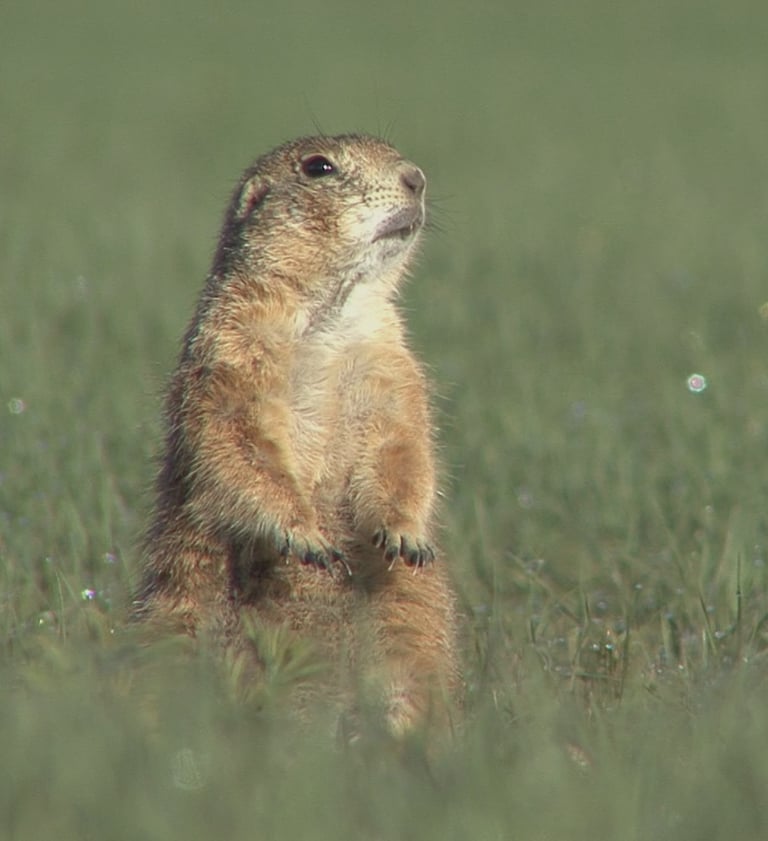
Creates habitat through burrows – Prairie dog towns provide shelter for dozens of species, including burrowing owls, black-footed ferrets, snakes, rabbits, and insects.
Primary prey for predators – They are a major food source for coyotes, badgers, ferruginous hawks, golden eagles, and prairie rattlesnakes, supporting predator populations.
Essential to black-footed ferret survival – Black-tailed prairie dogs make up most of the ferret’s diet and their burrows are used for denning; without prairie dogs, ferrets cannot persist.
Maintains grassland structure – Constant grazing keeps vegetation short, preventing shrub and tree encroachment and maintaining open prairie ecosystems.
Increases plant diversity – Their grazing and clipping create a mosaic of plant heights and growth stages, which supports a wider variety of plant species.
Improves soil aeration and nutrient cycling – Burrowing loosens compacted soil, improves water infiltration, and brings nutrient-rich subsoil to the surface.
Creates microhabitats – Mounds and disturbed soils support unique plants and insects that do not thrive in undisturbed prairie.
Enhances foraging for large herbivores – Bison, pronghorn, and cattle often prefer grazing on prairie dog towns because new plant growth there is more nutritious.
Supports grassland birds – Species such as mountain plovers, horned larks, and killdeer rely on the short vegetation maintained by prairie dogs for nesting and foraging.
Shapes predator behavior and distribution – Concentrated prairie dog colonies influence where predators hunt and den, structuring the broader food web.
Pronghorn Productions, LLC.
Questions or comments? Reach out anytime.
get updates
president@pronghornproductions.com
605 390-7398
© 2025. All rights reserved.